


Why are light bulbs so confusing!?!
.jpg "Why are light bulbs so confusing!?!")
First, you can check out our light bulbs here.
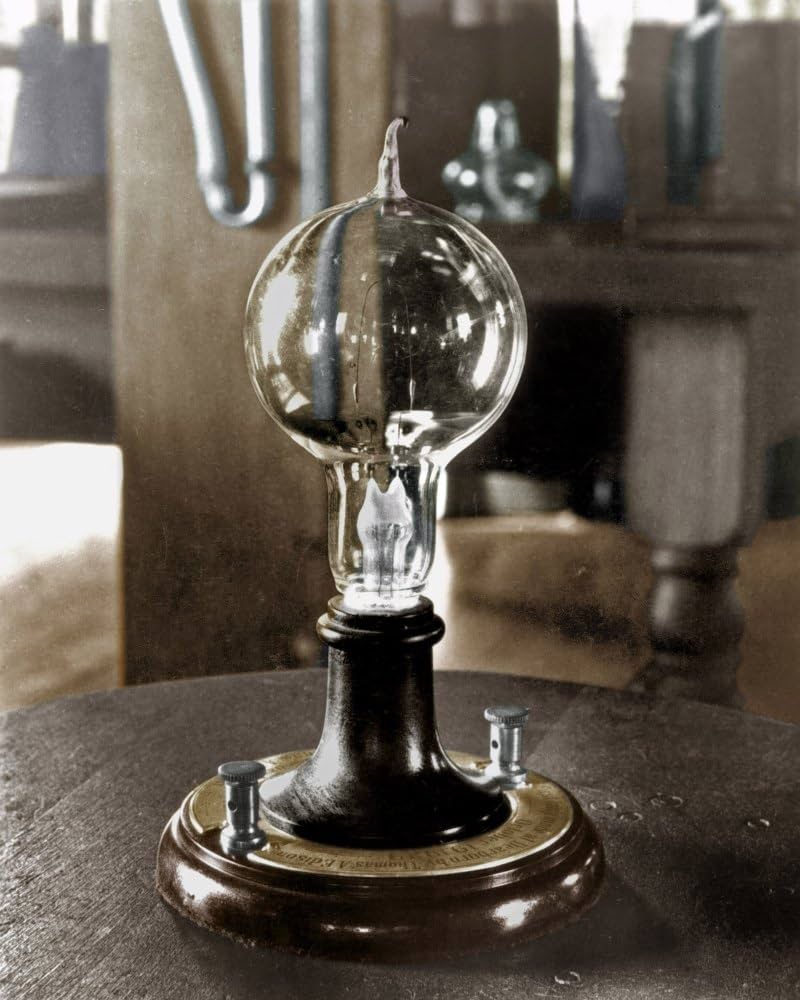
Now, to answer the question we have to go back quite a ways. Commercially viable light bulbs were invented by Thomas Edison in the 1880s. This was the incandescent (not burning) light bulb. It consisted of a tungsten filament in a vacuum inside a glass globe with a base that screwed into an electric socket. An electric current runs through the filament, heating it until it glows. The vacuum keeps the tungsten from burning, and the glass globe allows the light to shine out. As electricity grids spread, so did the use of incandescent bulbs. And although there were many shapes and sizes, and the vacuum was replaced by inert gas, all bulbs were essentially the same, having those four basic components. People naturally associated the amount of light given off by a bulb with the amount of electrical power it used. A bulb that used 25 watts of power was not as bright as one that used 40 watts. So although watts describe electrical power, people thought of it as brightness.
In the early 1900s, neon, mercury vapor, and sodium vapor lighting was introduced for special lighting applications.
.jpg)
Then, in the 1940s, General Electric introduced fluorescent bulbs, which produce much more light per watt than incandescent bulbs. These bulbs were used mainly in factories and office buildings until the 80s, when compact fluorescent bulbs were introduced for home use. Fluorescent bulbs use about a quarter of the power to produce the same amount of light.

In the 1960s, LEDs were introduced in digital screens but it wasn't until
the 2000s that they were bright enough to use for general lighting.
.jpg)
The new LED bulbs, using a tiny fraction of electrical power compared to
incandescents, further separated the idea of wattage from illumination.
Lumens Vs Watts
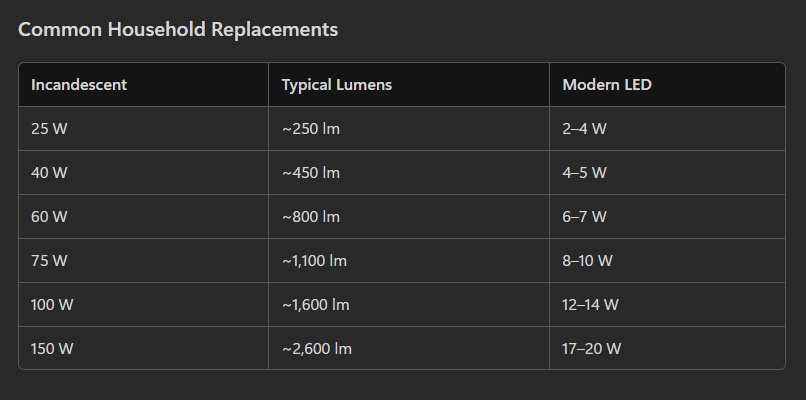
With incandescent, fluorescent, and LED bulbs all on the market, a more accurate way of comparing brightness was needed. Lumens had long been used by scientists to measure the output of light from a light-source. So the light bulb industry began to include lumens on the packaging to help consumers compare the brightness of the bulbs. The average consumer had never heard of lumens, so to give them a familiar reference, the industry also included what wattage incandesent bulb produced about the same amount of light. This is a big reason light bulbs can seem confusing.
Although standard base (E26) LED bulbs with the classic pear shape (A19) are used most often in general household lighting, there are still a wide variety of circumstances in which specialty bulbs either perform better, cost less, or simply won't work on standard household electricity. That is another reason light bulbs can seem so confusing. But don't worry. We will give you the information you need to make sense of it all. So next time one of your bulbs blows out, you won't be left in the dark.
Let's Start with Bases
.jpg)
E-Bases
We have already mentioned the standard household base; E26. Were does that come from? Well, E is for Edison. This was the style of base first developed in the Edison laboratory in the 1880s. The 26 is for 26 millimeters, the diameter of the base. Other E bases and their uses are;
E12 – Candelabra or Chandelier bulbs
E17 – Intermediate base for appliance, indicator, and other specialty bulbs
E27 – Standard in Europe
E39 – the Mogul base for large commercial or industrial lighting
So what are all those other bases for?
Although the Edison base was designated by an E, the other most common bases don't stand for something.
.jpg)
G Bases
G bases are two-pin bases. Like the E bases, the number is millimeters.
But in the case of G bases, it is millimeters between the pins.
Common G base bulbs and their uses;
G4 – Tiny, low-voltage lamps
G9 – Compact, decorative lamps
G13 – Long tube lamps
.jpg)
GU Bases
GU bases are similar to G bases, but the U means the pins have a cylindrical head at the end. The pin head was added to stabilize bulbs where vibration, movement, or leverage might cause the bulb to pull out unexpectedly, or precise alignment of the bulb was critical.
Common GU bulbs and there uses are;
GU4 – Display cases, under-cabinet lighting, china cabinets, RV's and Marine lighting
GU5.3 – Recessed ceiling fixtures, track lighting, MR16 spotlights
GU10 – Recessed and track lighting
.jpg)
W Bases
W or Wedge bases are glass wedges that push into the socket and are used most commonly
in automotive applications, instrument panels, marker lights, and landscaping lighting.
B/BA Bases
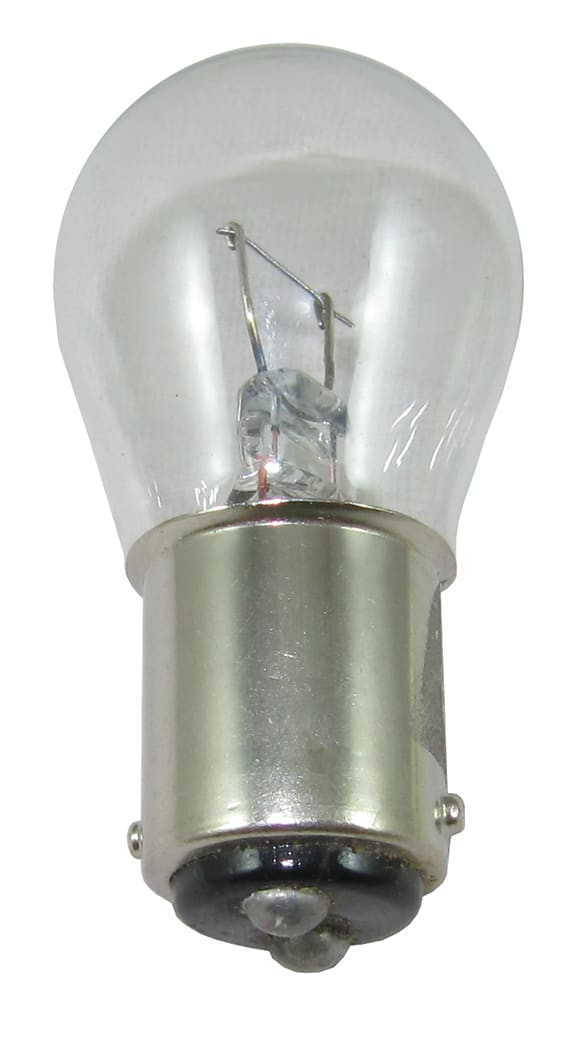
These are bayonet bases. They look similar to Edison bases without the threading.
They have two small bumps on either side and push in and twist lock in place.
They are often used in appliances, projectors, high-intensity lamps, and automotive applications.
There are more base types, but these are the most common in the US.
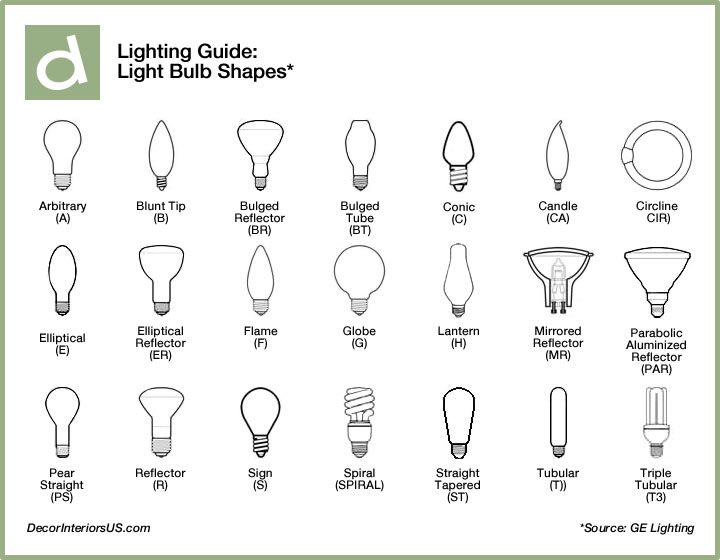
Bulb Shape and Size
Like the base, the shape and size of a bulb are designated with a letter for the shape, and a number for the size.
Unlike the bases, the number stands for the number of eighths of an inch, not millimeters.
.jpg)
The A shape light bulbs are the most common pear-shape bulbs.
The A19 bulb is pear-shape and 19 eighths of an inch wide, or 2-3/8 inches wide.
What about fluorescent bulbs?
.jpg)
Every fluorescent bulb has a code designation. When you know what each part means, they are easy to read.
The first part of the code stands for the shape of the tube. There are several shapes of fluorescent tubes.
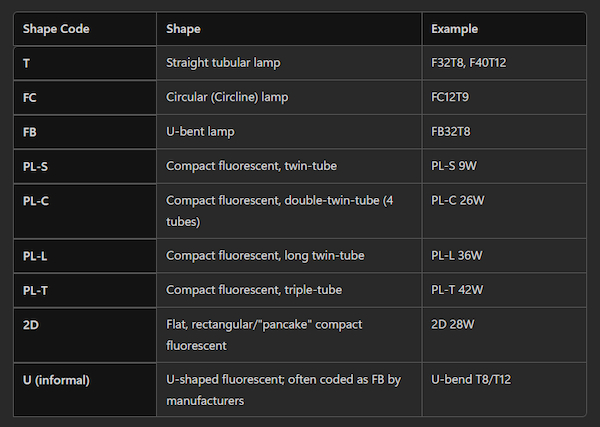
Then, in two-pin bulbs, comes the wattage. So F25 means a 25 watt straight fluorescent tube. In some older one-pin bulbs, the two numbers after the shape stand for the length of the bulb in inches. In that case F48 means it is a 48 inch fluorescent bulb. Next is the letter for the shape. After that is the diameter (in eighths of an inch). Then comes a code for the quality of light that the bulb gives off. These might be CW for cool white, WW for warm white, D for daylight, N for neutral, or HO for high output.
On some newer bulbs, after the shape and size of the tube, comes a three digit number that represents the Color Rendering Index (first digit) and the color temperature (last two digits). The Color Rendering Index is a percentage and compares the quality of the bulb's light to sunlight. A perfect match to sunlight would be a 100%. It's truncated to just the 10s digit on the bulbs. So the closer this digit is to 10, the closer the color of objects will be to their true color.
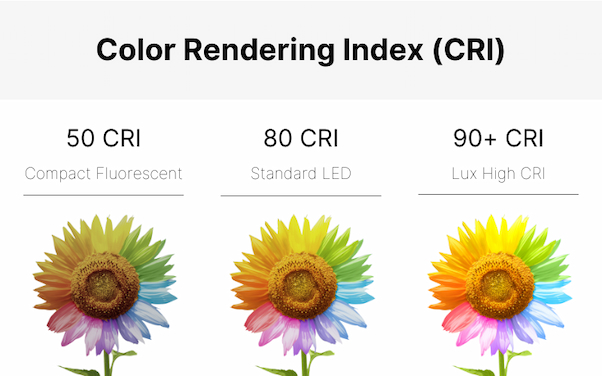
The next two digits represent the color temperature in hundreds of degrees Kelvin. Think of a piece of iron being heated. When it first starts to glow, it glows red. As it gets hotter it gets orange, then yellow, then white. If the iron didn't melt it would glow blue eventually. So high numbers here are bluer and lower numbers are more orange. Natural sunlight and incandescent bulbs are about 2700 K, which is a little yellowish and cozy. 5000 K is bluish, which we tend to associate with a bright, clinical feel.
.jpg)
So 935 means a Color Rendering Index of 9 (90 out of 100), so colors will look very close to natural. The 35 is for 3500 K, which is a warm light.
This is all based on the practices of General Electric, who was the first to introduce these classifications. And although other companies have their own variations, for the most part they adopted GE's methods. So, yes, light bulbs can be very complicated. Over the years, more and more styles and designs have been produced for an ever-growing number of uses. But hopefully, next time you need to find a specific bulb, with these few references in mind, they won't seems so confusing.
First, you can check out our light bulbs here.
Now, to answer the question we have to go back quite a ways. Commercially viable light bulbs were invented by Thomas Edison in the 1880s. This was the incandescent (not burning) light bulb. It consisted of a tungsten filament in a vacuum inside a glass globe with a base that screwed into an electric socket. An electric current runs through the filament, heating it until it glows. The vacuum keeps the tungsten from burning, and the glass globe allows the light to shine out. As electricity grids spread, so did the use of incandescent bulbs. And although there were many shapes and sizes, and the vacuum was replaced by inert gas, all bulbs were essentially the same, having those four basic components. People naturally associated the amount of light given off by a bulb with the amount of electrical power it used. A bulb that used 25 watts of power was not as bright as one that used 40 watts. So although watts describe electrical power, people thought of it as brightness.
In the early 1900s, neon, mercury vapor, and sodium vapor lighting was introduced for special lighting applications.
Then, in the 1940s, General Electric introduced fluorescent bulbs, which produce much more light per watt than incandescent bulbs. These bulbs were used mainly in factories and office buildings until the 80s, when compact fluorescent bulbs were introduced for home use. Fluorescent bulbs use about a quarter of the power to produce the same amount of light.
In the 1960s, LEDs were introduced in digital screens but it wasn't until
the 2000s that they were bright enough to use for general lighting.
The new LED bulbs, using a tiny fraction of electrical power compared to
incandescents, further separated the idea of wattage from illumination.
Lumens Vs Watts
With incandescent, fluorescent, and LED bulbs all on the market, a more accurate way of comparing brightness was needed. Lumens had long been used by scientists to measure the output of light from a light-source. So the light bulb industry began to include lumens on the packaging to help consumers compare the brightness of the bulbs. The average consumer had never heard of lumens, so to give them a familiar reference, the industry also included what wattage incandesent bulb produced about the same amount of light. This is a big reason light bulbs can seem confusing.
Although standard base (E26) LED bulbs with the classic pear shape (A19) are used most often in general household lighting, there are still a wide variety of circumstances in which specialty bulbs either perform better, cost less, or simply won't work on standard household electricity. That is another reason light bulbs can seem so confusing. But don't worry. We will give you the information you need to make sense of it all. So next time one of your bulbs blows out, you won't be left in the dark.
Let's Start with Bases
E-Bases
We have already mentioned the standard household base; E26. Were does that come from? Well, E is for Edison. This was the style of base first developed in the Edison laboratory in the 1880s. The 26 is for 26 millimeters, the diameter of the base. Other E bases and their uses are;
E12 – Candelabra or Chandelier bulbs
E17 – Intermediate base for appliance, indicator, and other specialty bulbs
E27 – Standard in Europe
E39 – the Mogul base for large commercial or industrial lighting
So what are all those other bases for?
Although the Edison base was designated by an E, the other most common bases don't stand for something.
G Bases
G bases are two-pin bases. Like the E bases, the number is millimeters.
But in the case of G bases, it is millimeters between the pins.
Common G base bulbs and their uses;
G4 – Tiny, low-voltage lamps
G9 – Compact, decorative lamps
G13 – Long tube lamps
GU Bases
GU bases are similar to G bases, but the U means the pins have a cylindrical head at the end. The pin head was added to stabilize bulbs where vibration, movement, or leverage might cause the bulb to pull out unexpectedly, or precise alignment of the bulb was critical.
Common GU bulbs and there uses are;
GU4 – Display cases, under-cabinet lighting, china cabinets, RV's and Marine lighting
GU5.3 – Recessed ceiling fixtures, track lighting, MR16 spotlights
GU10 – Recessed and track lighting
W Bases
W or Wedge bases are glass wedges that push into the socket and are used most commonly
in automotive applications, instrument panels, marker lights, and landscaping lighting.
B/BA Bases
These are bayonet bases. They look similar to Edison bases without the threading.
They have two small bumps on either side and push in and twist lock in place.
They are often used in appliances, projectors, high-intensity lamps, and automotive applications.
There are more base types, but these are the most common in the US.
Bulb Shape and Size
Like the base, the shape and size of a bulb are designated with a letter for the shape, and a number for the size.
Unlike the bases, the number stands for the number of eighths of an inch, not millimeters.
The A shape light bulbs are the most common pear-shape bulbs.
The A19 bulb is pear-shape and 19 eighths of an inch wide, or 2-3/8 inches wide.
What about fluorescent bulbs?
Every fluorescent bulb has a code designation. When you know what each part means, they are easy to read.
The first part of the code stands for the shape of the tube. There are several shapes of fluorescent tubes.
Then, in two-pin bulbs, comes the wattage. So F25 means a 25 watt straight fluorescent tube. In some older one-pin bulbs, the two numbers after the shape stand for the length of the bulb in inches. In that case F48 means it is a 48 inch fluorescent bulb. Next is the letter for the shape. After that is the diameter (in eighths of an inch). Then comes a code for the quality of light that the bulb gives off. These might be CW for cool white, WW for warm white, D for daylight, N for neutral, or HO for high output.
On some newer bulbs, after the shape and size of the tube, comes a three digit number that represents the Color Rendering Index (first digit) and the color temperature (last two digits). The Color Rendering Index is a percentage and compares the quality of the bulb's light to sunlight. A perfect match to sunlight would be a 100%. It's truncated to just the 10s digit on the bulbs. So the closer this digit is to 10, the closer the color of objects will be to their true color.
The next two digits represent the color temperature in hundreds of degrees Kelvin. Think of a piece of iron being heated. When it first starts to glow, it glows red. As it gets hotter it gets orange, then yellow, then white. If the iron didn't melt it would glow blue eventually. So high numbers here are bluer and lower numbers are more orange. Natural sunlight and incandescent bulbs are about 2700 K, which is a little yellowish and cozy. 5000 K is bluish, which we tend to associate with a bright, clinical feel.
So 935 means a Color Rendering Index of 9 (90 out of 100), so colors will look very close to natural. The 35 is for 3500 K, which is a warm light.
This is all based on the practices of General Electric, who was the first to introduce these classifications. And although other companies have their own variations, for the most part they adopted GE's methods. So, yes, light bulbs can be very complicated. Over the years, more and more styles and designs have been produced for an ever-growing number of uses. But hopefully, next time you need to find a specific bulb, with these few references in mind, they won't seems so confusing.